Cintthia Font: Elevating Small Business Branding
I still remember the exact moment I realized my candle business had a typography problem. I was standing at a local craft market, watching potential customers pick up my jars, squint at the labels, and then put them back down. My product smelled amazing, and the wax was perfectly poured, but my branding felt disjointed. The label font was too stiff, the packaging looked generic, and nothing about the visual experience matched the warm, cozy feeling I wanted my brand to convey. That afternoon, I decided to stop treating typography as an afterthought and started looking for a typeface that could actually carry the personality of my business. That search led me to Cintthia.
Finding Personality in a Premium Font
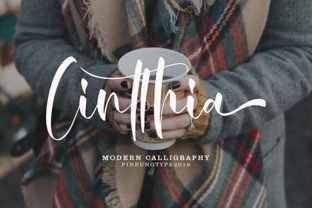
As entrepreneurs, we often get caught up in product development and logistics, leaving design for the "someday" pile. But when you are selling handmade goods or boutique items, your visual identity is just as important as your inventory. Cintthia is a handwritten font that immediately struck me because it balances charm with incredible legibility. Many script fonts sacrifice readability for flair, resulting in beautiful lettering that customers simply cannot read on a small jar label or a mobile screen. Cintthia avoids this trap entirely. It has smooth lining and a natural flow that feels authentic rather than manufactured, making it an ideal choice for businesses that want to appear approachable yet polished.
The personality of this typeface is undeniably warm. It carries a sense of craftsmanship and personal touch that standard system fonts lack. When I applied it to my candle labels, the transformation was instant. The text didn't just sit on the sticker; it danced with the aesthetic of the product. For small business owners in the Script Amp category, finding a creative font that doesn't look like a default template is crucial for standing out in a saturated market. Cintthia provides that distinctiveness without feeling gimmicky.
Practical Applications Across Business Touchpoints
One of the biggest challenges in building a brand identity is consistency. You need a display font that works as well on a 2-inch sticker as it does on a website banner. In my own journey, I found Cintthia to be remarkably versatile across different mediums. It became the anchor for my entire visual refresh.
- Product Packaging: This is where Cintthia shines brightest. Whether you are designing a bakery box, a skincare bottle, or a candle jar, the font’s legibility ensures customers can identify the scent or flavor instantly while still feeling the artisanal vibe.
- Social Media Graphics: On Instagram and Pinterest, thumbnails are tiny. Thick, ornate scripts often turn into unreadable blobs when scaled down. Cintthia’s clean lines maintain their integrity even in small formats, making it perfect for quote cards, announcement posts, and story highlights.
- Thank-You Cards and Inserts: Unboxing is a critical part of the customer experience for online sellers. Using this handwritten font for "Thank You" headers or care instructions adds a layer of intimacy that mimics actual handwriting, reinforcing the connection between maker and buyer.
- Logo Design and Signage: While it works beautifully as a supporting element, Cintthia is strong enough to stand alone in logo design. Its unique character shapes make for memorable wordmarks that don't require extensive modification to look custom.
The Readability Factor in Commercial Design
We have all fallen in love with a gorgeous editorial font only to realize it is useless for actual commerce. Legibility is not just a design preference; it is a sales tool. If a customer cannot read your menu at a café or decipher the ingredients list on a beauty product, they will likely move on. Cintthia respects the reader. The spacing is generous, and the letterforms are distinct, which reduces cognitive load for the viewer.
This readability extends to digital spaces as well. When designing web banners or digital ads, contrast and clarity are paramount. I have used Cintthia for headlines on my shop homepage, pairing it with high-quality photography. The result is a modern typography aesthetic that guides the eye naturally. It signals to the visitor that this is a professional operation that cares about details. Trust is built in these micro-interactions, and having a commercial font that prioritizes user experience is a subtle but powerful way to establish that trust.
Pairing Strategies for a Cohesive Look
A single font rarely does all the heavy lifting. To create a truly professional brand kit, you need to master font pairing. Cintthia acts as a fantastic primary display font, but it needs a reliable partner for body copy and fine print. Because Cintthia has such a fluid, organic structure, it pairs exceptionally well with structured, minimalist typefaces.
For my own brand, I pair it with a clean sans serif font for ingredient lists, pricing, and website navigation. The contrast between the expressive script and the utilitarian sans serif creates a dynamic visual hierarchy that looks intentional and high-end. Alternatively, if you are aiming for a more traditional or luxury feel, an elegant serif font can complement Cintthia’s handwritten nature without competing for attention. The key is to let Cintthia be the star of the show in headlines and logos while using simpler fonts to handle the functional information. This balance is what separates DIY designs from professional brand identities.
Licensing and Technical Considerations
Before you download any design assets for your business, always verify the licensing. As a small business owner, protecting yourself legally is as important as choosing the right color palette. When incorporating Cintthia into your workflow, check whether your license covers commercial use, especially if you plan to sell physical products with the font embedded in the packaging or logo. Most premium font licenses distinguish between personal use, commercial desktop use, and webfont usage.
Additionally, explore the included file formats and features. OpenType features like ligatures and alternates can take your design from good to great. These features allow you to customize connections between letters or swap out characters to avoid repetition, giving your branding a bespoke quality. Also, confirm multilingual support if you serve international customers or use non-English terms in your branding. Ensuring you have the right technical specs upfront saves headaches during the printing or web development phase.
Making the Shift to Intentional Typography
Updating my branding with Cintthia wasn't just about making things look prettier; it was about aligning my visual output with my business values. The feedback from customers changed almost immediately. People started commenting on how "lovely" the packaging was and how easy the labels were to read. Sales at markets improved because the booth looked more cohesive and trustworthy. Typography is often the silent ambassador of your brand, speaking to customers before they ever interact with your product.
If you are currently feeling stuck with your visuals, or if your current fonts feel tired and inconsistent, consider making the switch to a typeface that offers both style and substance. Cintthia bridges the gap between artistic expression and commercial practicality. It allows you to infuse your business materials with warmth and charm without sacrificing the professionalism required to grow. In the world of small business, every detail counts, and choosing the right font is one of the most impactful investments you can make in your brand's future.